
About Front Royal Dumpster Rental Guys
Locally owned, over 10 years in, and we know the county's debris rules, Virginia DEQ burning restrictions, the covered-load requirement, the Bentonville transfer-station run and the valley clay that shape every Front Royal job.
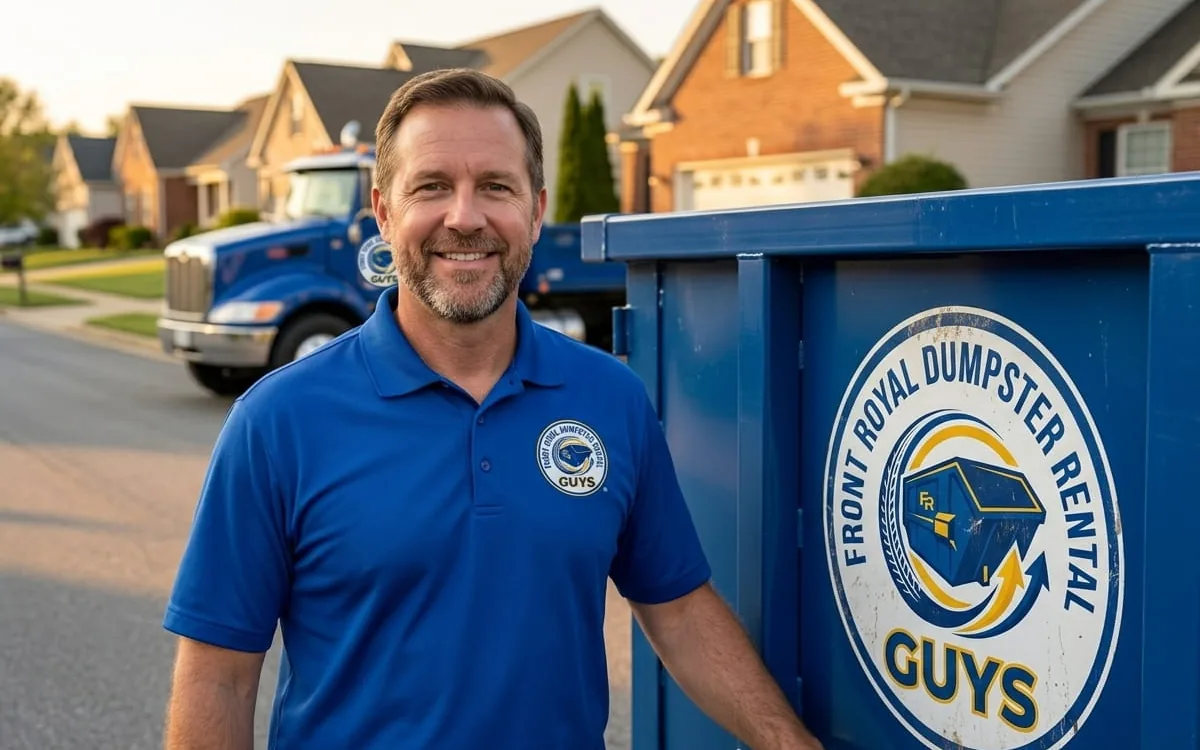
How this started
Wade Fristoe had worked construction and hauling around Front Royal and Warren County for years when he started the company with a single truck and one container in 2016. He'd spent long enough on job sites to know exactly what went wrong with dumpsters: containers that turned up late or in the wrong size, prices that changed once the load crossed a scale, and out-of-town haulers who didn't know the run to the Bentonville transfer station, the Virginia rules on burning, how heavy this valley clay gets after a rain, or how a storm off the Blue Ridge fills a yard with brush.
The idea was simple: run it like a Front Royal outfit that actually knows Front Royal. More than a decade in, the operating principle hasn't moved: tell people the truth about what they need, protect the property, keep the job clean, know exactly where the debris goes, and charge the number that was quoted.
What we actually do differently
We know the local rules and where the debris goes. In Front Royal the county convenience sites won't take construction debris, and Virginia DEQ prohibits burning it. Residents get only 999 pounds of construction debris free a day at the Warren County Transfer Station at Bentonville before the per-ton fee, and Virginia's 4 PM Burning Law restricts open burning through the spring fire season - so a real project's debris goes covered to Bentonville, with Freon appliances, tires, electronics and brush routed to the right place, and clean metal and concrete kept separate for recycling. We know the run and the county programs cold, and we keep the job clean and compliant. On the day, that's the whole job.
We recommend smaller containers. This one surprises people. Dense material - plaster, tile, concrete and the wet valley clay - reaches a container's tonnage allowance while it still looks half empty. Recommending the 15 yard instead of the 20, or a dedicated 10 for the concrete, costs us revenue and saves the customer money. We do it anyway.
We're built for a college town and hard valley winters. Front Royal is a Central Virginia University town, so much of the work is student move-outs, rental turnovers and campus-area remodels - bulky and dense debris both - and winter cleanup is a way of life here, not an exception. When a storm or the spring thaw comes through and the whole area needs containers at once, being a local crew is what lets us respond - and we size a storm container to the mixed debris and get it out fast.
One number, covered loads. The flat rate covers delivery, the rental period, collection, the disposal and a stated tonnage allowance, with the overage rate quoted in the same breath. And every load leaves covered and secured for the haul, as Virginia requires. No fuel surcharge, no environmental fee appearing on an invoice for the first time.
Why local knowledge matters here
Front Royal is the seat of Warren County, a Shenandoah River town in the northern Shenandoah Valley about 70 miles north of Washington on I-66 and US-340 - the home of the Skyline Drive tourism corridor and the valley, once the "Canoe Capital of Virginia" in the 1920s, now a college town anchored by the university and the Shenandoah Valley community. That mix shapes the work. Student move-outs and rental turnovers near campus, established neighborhoods seeing remodel after remodel, and the older homes giving up dense material on a gut. And nearly every job that moves earth hits the clay-loam and valley clay till that heaves with deep winter frost.
Then there's the regulatory reality that shapes all of it: construction debris being barred from the recycling center, Virginia DEQ restrictions on burning it, the Warren County Transfer Station at Bentonville and the county recycling programs that take the rest, the recycling of clean metal and concrete, the ban on burning treated lumber, and the covered-load requirement on every haul. A company that works the system every day knows all of it. We quote each job on what it actually is, and we'll explain the difference if you want to hear it.
The people you'll deal with
- Wade Fristoe — Owner & Founder. Years in local construction and hauling before starting the company. Still takes sizing calls, particularly on anything involving concrete, valley clay, heavy demolition or a tricky placement near campus.
- Chad Racey — Operations Manager. Runs the schedule, the swaps and the contractor and property-management accounts, and knows which runs across Warren County a loaded truck can and can't make in a day. If you need a same-day swap, he's the one who makes it happen.
- Dustin Kerfoot — Lead Driver. Has been placing containers on the northern Shenandoah Valley driveways for years and sizes a load by eye better than most. If he says a 30 won't fit your lot, it won't.
- Amber Sealock — Customer Care Lead. First voice on the phone most mornings, and the person who will walk you through the local rules, what can and can't go in the container, and where the electronics, tires, appliances and brush need to go.
Where we work
Front Royal, Riverton, Bentonville, Linden, Browntown, Strasburg, Woodstock, Berryville, Boyce, Luray, Stanley, Flint Hill, Sperryville, Marshall and Middletown across Warren County and the northern Shenandoah Valley. If you're further out than that, call anyway and we'll tell you honestly whether we're the right company for the job.
Talk to a local who knows Warren County
Call and describe the job. You'll get an honest size recommendation, the debris rules handled, the disposal picture, and one flat rate.
(540) 660-7677